
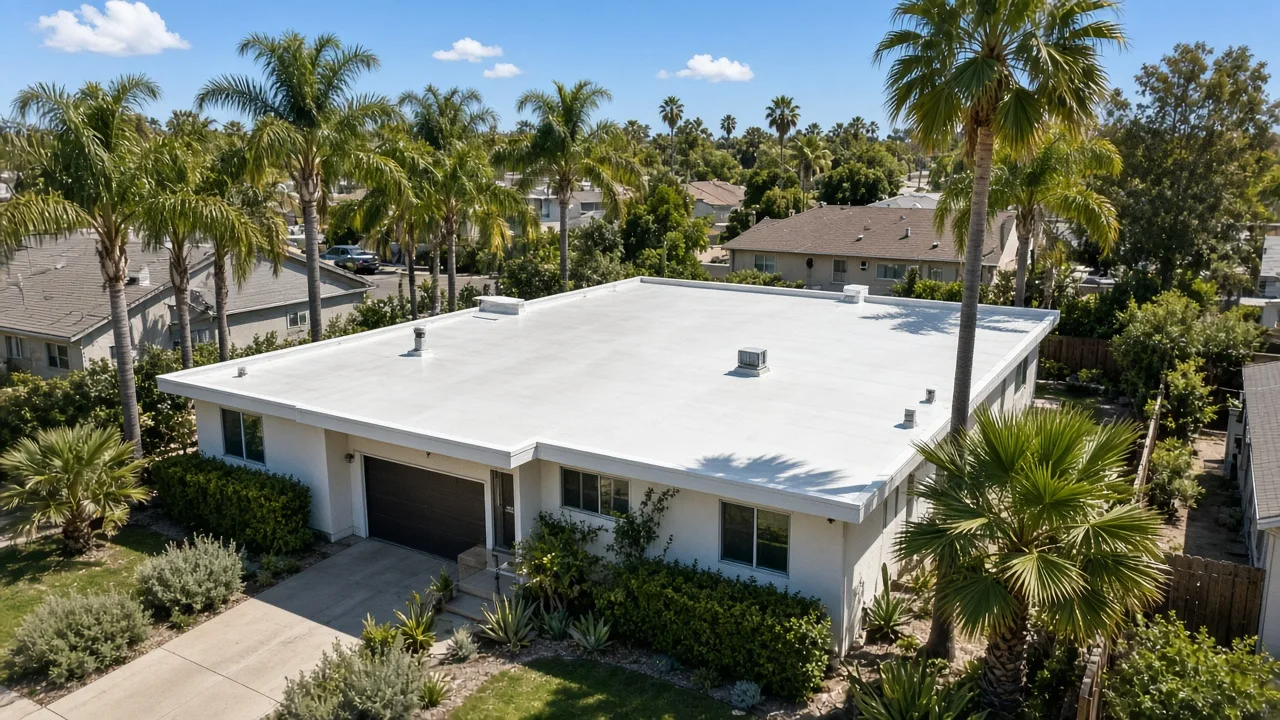
With long, sunny summers and rising energy prices, many San Diego homeowners are asking whether a reflective roof can lower their cooling bills. Cool roofs have been part of California's building standards for years, and understanding how they work helps you decide whether one makes sense for your home.
What Is a Cool Roof?
A cool roof is designed to reflect more sunlight and absorb less heat than a conventional roof. Two properties matter: solar reflectance, the fraction of sunlight the roof reflects, and thermal emittance, how well the roof releases absorbed heat. Together they determine how hot the roof surface becomes. A dark traditional roof can reach very high surface temperatures in direct sun, while a cool roof may run noticeably cooler.
Materials and Options
- Cool asphalt shingles. Shingles with specially coated granules that reflect more infrared light, available in a range of colours.
- Cool tiles. Clay and concrete tiles with reflective pigments or coatings.
- Metal roofing. Many metal roofs with reflective finishes perform well.
- Single-ply membranes. White TPO or PVC membranes are common on flat or low-slope roofs.
- Reflective coatings. Elastomeric coatings applied over existing roofs, often used on flat roofs.
Many products are rated by the Cool Roof Rating Council, and a rating label helps you compare solar reflectance and emittance values.
How Much Can You Save?
Savings depend on the home's insulation, ductwork, attic ventilation, climate and the roof's original colour. Homes with air conditioning in sunny inland areas tend to see larger benefits than homes near the coast that rarely run cooling. Studies by research organisations have generally found measurable reductions in cooling energy for homes with cool roofs, though the amount varies. A cool roof will not eliminate cooling costs, and it is most effective when combined with good insulation and attic ventilation.
California Requirements
California's energy code, Title 24, includes cool roof requirements for many new roofs and re-roofing projects, with different standards for low-slope and steep-slope roofs and by climate zone. Requirements and exemptions change with code updates, so ask your contractor which provisions apply to your project, and whether a permit is required.
Trade-Offs to Consider
- Heating in winter. A cool roof reflects heat year round. In San Diego's mild climate the winter penalty is usually small.
- Appearance. Some reflective colours look different from traditional dark roofs, though modern cool shingles and tiles offer many choices.
- Cost. Cool products can cost slightly more than standard equivalents, though the difference is often modest.
- Maintenance. White or light surfaces can collect dirt and lose some reflectivity over time, so periodic cleaning may be needed.
- HOA rules. Check community guidelines on roof colours and materials.
Incentives
Utility or government rebates for cool roofs have been offered in some areas and years, but programmes change frequently. Check with your electric utility and state energy resources for what is available now.
Is a Cool Roof Right for You?
If you are due for a replacement anyway, choosing a cool product is often an easy decision, because the incremental cost is small and the benefits last for the life of the roof. If your roof is in good condition, a coating may be an option on flat roofs, but replacing a healthy pitched roof solely for cooling savings is rarely cost-effective. A licensed roofer can assess your roof's condition, your home's cooling needs and the code requirements that apply.
Combined with adequate insulation, sealed ductwork and attic ventilation, a cool roof is one more practical tool for keeping a Southern California home comfortable and keeping summer energy bills under control.