
In San Diego, rain is infrequent, which means roof leaks often go unnoticed until the first heavy storm of the season. By then, water may have been seeping into the structure for months. Learning the early warning signs lets you act while the repair is still small and inexpensive.
Signs Inside the House
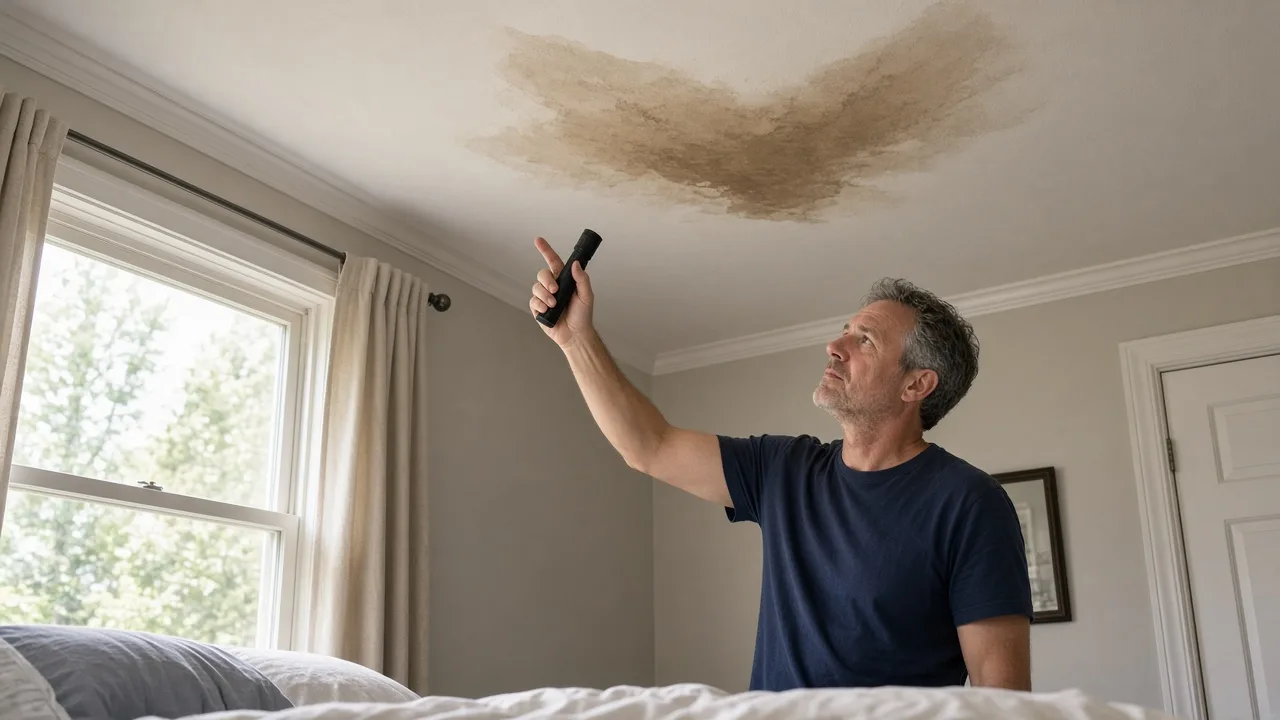
- Ceiling stains. Brown or yellow rings on the ceiling are the classic sign. They may grow after each rain.
- Peeling paint or bubbling drywall. Moisture behind the surface causes paint to blister or drywall to sag.
- Musty odours. A persistent damp smell in an attic or upper room can indicate hidden moisture.
- Mold or mildew. Dark spots in corners or on attic wood suggest ongoing dampness.
- Damp insulation. Wet or matted insulation in the attic loses its effectiveness and signals a leak above it.
- Light coming through. In the attic, daylight through the roof deck indicates holes.
Signs Outside the House
- Missing, cracked or curling shingles. Damaged shingles expose the underlayment and let water in.
- Granules in gutters. Asphalt shingles shed granules as they age. Heavy accumulation suggests a roof nearing the end of its life.
- Damaged flashing. Flashing around chimneys, vents, skylights and wall intersections is a common leak point. Look for gaps, rust or lifted edges.
- Cracked or slipped tiles. On tile roofs, broken tiles or slipped pieces can expose the underlayment.
- Sagging areas. A dip in the roof line can indicate a soft deck from long-term moisture.
- Stains on exterior walls or eaves. These can show where water has been running.
Where Leaks Usually Start
Most leaks begin at penetrations and transitions rather than in the middle of a roof surface. Plumbing vents, chimneys, skylights, valleys, and the junctions where a roof meets a wall are the most common sources. Water can travel along rafters before it appears on the ceiling, so the stain is often some distance from the actual entry point.
How to Trace a Leak Safely
Start in the attic with a flashlight, looking for wet wood, stains or dripping. Work upward from the stain, following the path of water. Do not walk on the roof if it is steep, wet or fragile. Tile in particular breaks easily underfoot. Use binoculars from the ground to scan for obvious damage. If you must go up, use proper fall protection, or leave the inspection to a professional.
What to Do Right Away
- Place a bucket under active drips, and move belongings away from the area.
- Puncture a bulging ceiling carefully to release trapped water, which prevents a larger collapse.
- Take dated photos of the damage for insurance purposes.
- Arrange a temporary cover, such as a tarp properly secured, only if it can be done safely.
- Contact a licensed roofer for an inspection and a written estimate.
Temporary Fixes vs. Real Repairs
Roofing cement and sealants can slow a leak for a short time, but they rarely address the underlying cause. A proper repair replaces damaged materials, renews flashing and seals penetrations correctly. If the roof is near the end of its life, repeated repairs may cost more than a replacement.
Prevent Future Leaks
- Have the roof inspected annually and after major storms or wind events.
- Keep gutters and valleys clear of debris.
- Trim overhanging branches that scrape or drop debris onto the roof.
- Replace worn sealants around vents and flashing before the rainy season.
Addressing a small leak early is almost always cheaper than waiting for visible damage. If you notice any of these signs, schedule an inspection before the next rain.