
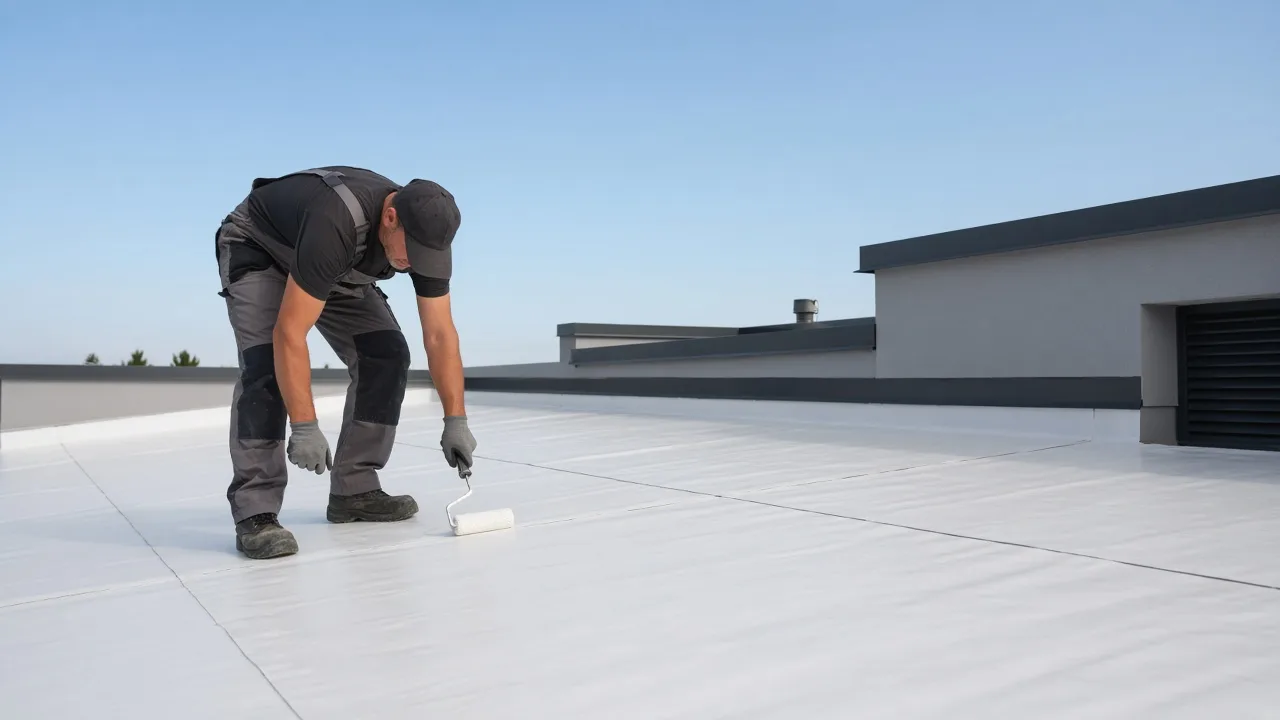
Flat and low-slope roofs are common on San Diego homes, additions, patios and commercial buildings. They are not truly flat, since they need a slight slope to drain, but they work very differently from pitched roofs covered in shingles or tile. Choosing the right system depends on budget, climate, building use and how long you plan to own the property.
What Makes Flat Roofs Different
Because water moves slowly across a low slope, flat roofs depend on a continuous waterproof membrane rather than overlapping materials. Seams, penetrations and drains are the critical details. Good drainage is essential, since ponding water adds weight and accelerates wear. Many problems with flat roofs trace to poor drainage or poorly sealed details, not to the membrane itself.
Common Flat Roof Systems
TPO (Thermoplastic Polyolefin)
TPO is a single-ply membrane, usually white or light grey, that is installed in sheets with heat-welded seams. It reflects sunlight well, which helps with cooling in sunny climates, and it is popular for both residential and commercial work. Quality varies between manufacturers, so product choice and installer skill are important. Typical lifespans are in the range of fifteen to twenty-plus years when well installed and maintained.
PVC
PVC is another single-ply membrane with welded seams. It resists chemicals, grease and standing water well, and is often used on restaurants and buildings with rooftop equipment. It generally costs more than TPO.
Modified Bitumen
Modified bitumen is an asphalt-based sheet reinforced with polymers, installed in one or more layers and often finished with a granulated or coated surface. It can be applied with a torch, hot asphalt, cold adhesive or self-adhering sheets. It is durable, relatively easy to repair and widely used on residential flat roofs. A reflective coating or a cap sheet can improve its performance in sun.
Built-Up Roofing (BUR)
Built-up roofing, often called tar and gravel, consists of multiple layers of felt and asphalt topped with gravel or a cap sheet. It has a long track record and good redundancy, since several layers protect the building. It is heavy, installation involves hot materials and it is less common on new residential work than it once was.
Liquid-Applied Coatings
Elastomeric or silicone coatings are applied over an existing roof in a seamless layer. They can extend the life of a sound roof, reflect sunlight and seal minor imperfections. They are not a fix for roofs with wet insulation or major structural deterioration.
How to Choose
- Budget. Modified bitumen and BUR are often moderately priced, TPO is competitive, and PVC is typically higher.
- Climate. In sunny Southern California, reflective surfaces such as white TPO or coated roofs reduce heat gain.
- Roof use. If the roof will be walked on or hold equipment, choose a durable system and add walkway pads.
- Existing structure. The condition of the deck and insulation influences whether you can recover the existing roof or must tear it off.
- Code and permits. Title 24 cool roof requirements and local permit rules may apply.
Maintenance Matters
Whatever system you choose, inspect it twice a year and after major storms. Keep drains and scuppers clear, remove debris, check seams and flashing, and repair small punctures promptly. Avoid walking on the roof in the heat when membranes are soft, and keep foot traffic to marked paths.
Questions for Your Roofer
- What system do you recommend for my roof, and why?
- How will you handle drainage and slope?
- What warranty is offered on materials and on workmanship, and what does it require from me?
- Are you licensed and insured in California?
- Will the existing roof be removed, or recovered?
A flat roof that is well designed, properly installed and regularly maintained can serve for decades. Get more than one written estimate, compare the specifications and not only the price, and choose a contractor who is willing to explain the details of the system they propose.